Places · Clarington, Ontario
Published
Camp 30: Bowmanville’s history needs a future it can keep
Camp 30 began as a boys’ training school in 1925 and later held German officers during the Second World War. Its surviving buildings are nationally designated heritage. Clarington owns the cafeteria and is planning its future with the Jury Lands Foundation, while condition, sustainable use and safe access remain central to preservation.
Facts checked
In this story
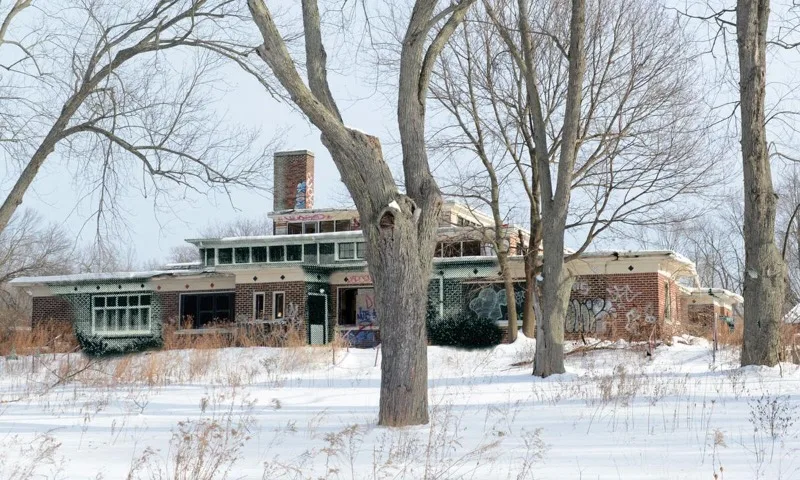
The buildings have already lived more than one life
Camp 30 was a boys’ training school before it was a prisoner-of-war camp. The Bowmanville campus opened in 1925; during the Second World War it held captured high-ranking German officers. The surviving buildings carry both histories, although the wartime chapter tends to attract more attention.
They are more than scenery for a dramatic story. An original room can make the past tangible in a way a paragraph on a sign cannot. It also needs walls, a roof and somebody responsible for keeping it usable.
Source: Clarington Jury Lands history and plans
Source: Camp 30 cafeteria report
Source: Clarington council pledges $500 k to preserve Camp 30
The cafeteria makes the question concrete
Clarington took ownership of the cafeteria in December 2021 and is working with the Jury Lands Foundation. The site received national historic designation in 2013, while municipal planning and structural documents set out the less glamorous work behind any future public use.
Designation recognises importance; it does not repair a building. Stabilising the cafeteria, restoring an interior and opening an interpretation space are different undertakings, with different continuing obligations. That is where the emotional wish to save Camp 30 meets a project somebody can deliver.
Source: Clarington Jury Lands history and plans
Source: Camp 30 cafeteria report
Source: Clarington council pledges $500 k to preserve Camp 30
People are asking to preserve different things
Some contributors to an older Durham conversation imagined a museum. Others favoured a park with interpretation boards, or concentrating money on one or two buildings instead of trying to restore everything. Frustration about delay ran alongside concern about cost.
Those are competing proposals, not a contest between people who care about history and people who do not. An ambitious restoration and a modest, well-kept interpretation space offer different benefits. Unverified estimates of damage or past spending cannot decide between them.
Source: Clarington Jury Lands history and plans
Source: Camp 30 cafeteria report
Source: Clarington council pledges $500 k to preserve Camp 30
Give the school years their place too
A complete account would explain the training school as well as the camp, using records, photographs and surviving spaces together. Otherwise the better-known wartime story risks swallowing the place’s earlier life.
Older local accounts also confused Camp 30 with Camp X. They are separate sites. Clear interpretation can do something useful here: tell visitors where they are, what happened there and why some parts remain inaccessible, without making a mystery of every fence.
Source: Clarington Jury Lands history and plans
Source: Camp 30 cafeteria report
Source: Clarington council pledges $500 k to preserve Camp 30
A promise worth maintaining
For a visit, follow current authorised arrangements rather than old exploration footage or a remembered tour. Heritage status is not permission to enter a building. That practical limit protects the possibility of a better future visit, as well as the person arriving now.
The next plan needs to name what will be preserved, how people will experience it and who keeps caring for it afterwards. Camp 30 does not lack a story. Its harder task is finding a lasting way for Bowmanville to tell it.
Source: Clarington Jury Lands history and plans
Source: Camp 30 cafeteria report
Source: Clarington council pledges $500 k to preserve Camp 30
Source: Clarington council pledges $500 k to preserve Camp 30
Questions people ask
Was Camp 30 originally a prison camp?
No. The site opened as a boys’ training school in 1925.
Source: Clarington Jury Lands history and plans
Who was held at Camp 30 during the war?
Clarington identifies captured high-ranking German officers.
Source: Clarington Jury Lands history and plans
When did Camp 30 become a National Historic Site?
Camp 30 received National Historic Site designation in 2013.
Source: Clarington Jury Lands history and plans
Does Clarington own the cafeteria building?
Yes. The cafeteria transferred to Clarington in December 2021 and is part of the municipality’s work with the Jury Lands Foundation.
Source: Clarington Jury Lands history and plans
Is Camp 30 the same as Camp X?
No. Camp 30 and Camp X are separate historic sites with different histories.
Source: Clarington Jury Lands history and plans
Can I go inside the Camp 30 cafeteria?
Do not enter unless the municipality explicitly permits access. Heritage protection does not make a building a public indoor attraction.
Source: Clarington Jury Lands history and plans
Who is involved in planning the site’s future?
Clarington is working with the Jury Lands Foundation.
Source: Clarington Jury Lands history and plans
Where can I read structural information?
The municipal Jury Lands page links a structural report and other documents.
Source: Clarington Jury Lands history and plans
Why is the Camp 30 cafeteria part of the restoration discussion?
It is one of the historic buildings at the Jury Lands, and Clarington owns it. The municipality links a cafeteria structural report with its planning documents.
Source: Camp 30 cafeteria report
Where can I find official Camp 30 redevelopment plans?
Clarington’s Jury Lands page brings together the project history, planning information and reports.
Something changed? Tell us about a correction.